Why does wood change its shape – and what to do about cracks?
Wood is a living material. It reacts to temperature, humidity, and environmental influences. Anyone who works with solid wood or owns wooden furniture knows that sometimes wood warps, small cracks appear, or boards become uneven.
But there's no need to worry – with proper care and a little knowledge, wood can be easily repaired and filled.
Why does my wood change its shape?
Wood is constantly working. It absorbs moisture from the air and releases it again when dry. This causes the material to expand or contract.
This movement causes panels to warp slightly or crooked boards to need straightening.
In winter, with dry heating air, wood can shrink; in summer, with high humidity, it expands again.
So, if you ask when wood expands, the simple answer is: when the ambient air becomes more humid.
These natural fluctuations are not a defect in quality, but a sign that the wood is "alive".
How do cracks form in wood?
When the surface dries quickly but the interior still contains moisture, tension builds up.
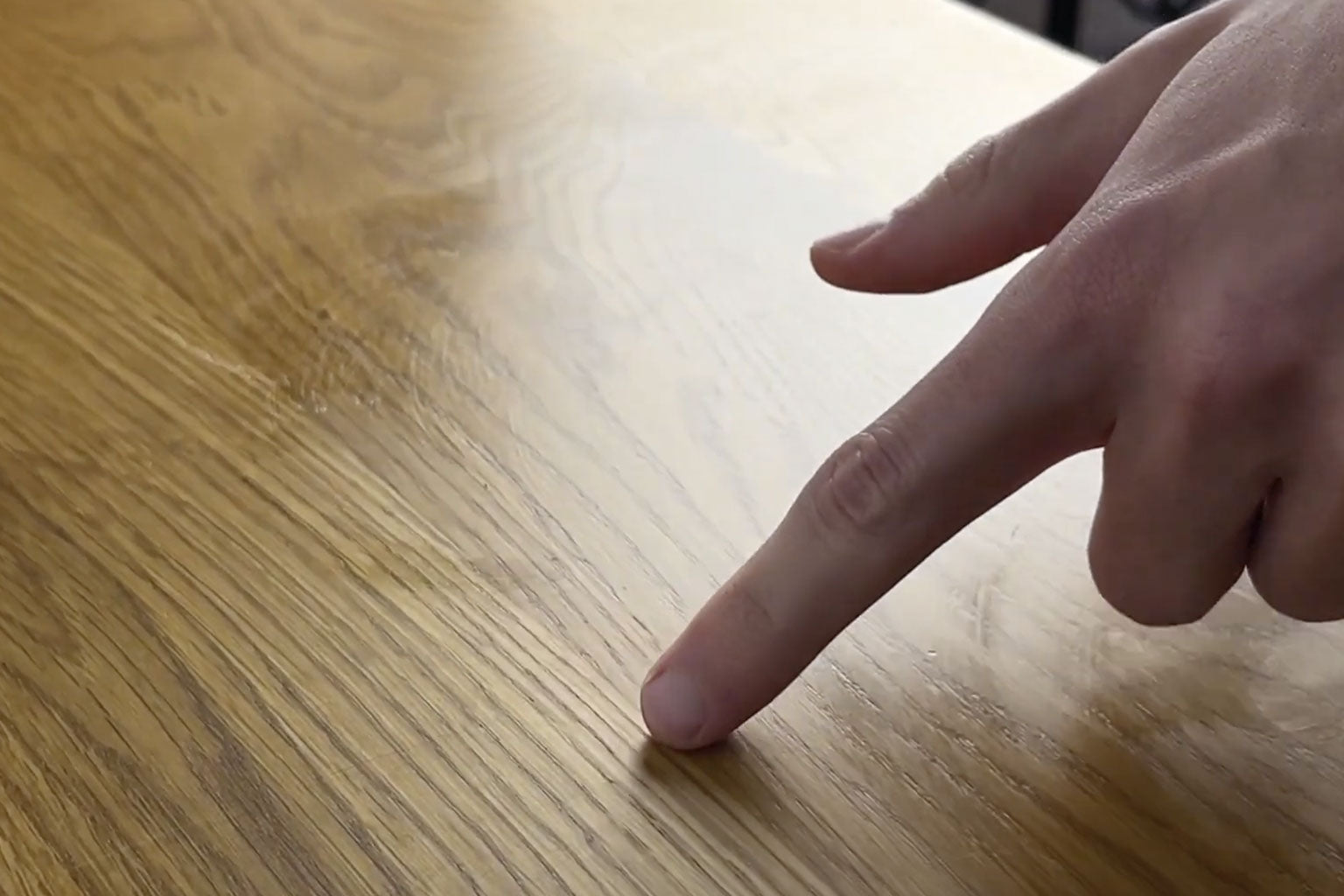
This tension leads to stress cracks in wood, especially in large panels or beams.
Heat sources like underfloor heating or direct sunlight can also contribute to small cracks in the wood no longer closing on their own.
Another reason is uneven drying during manufacturing. Solid wood, in particular, is sensitive to differences in moisture between the core and the surface – this is often where furniture cracks or fine lines appear that become visible later.
When manufacturing BestLoft furniture, we ensure that tensions are glued against each other. This automatically releases the tension. Nevertheless, the factors mentioned above can still cause cracks in rare cases.
How can cracks be prevented?
For wood to behave as uniformly as possible, the room climate should remain constant.
Ideally, this means 18–22 °C and a humidity of about 45–55%.
Regular re-oiling or waxing also helps to keep the surface supple and prevent wood from warping. You can find the right product here: Care Set.
Especially oiled surfaces benefit from occasional care with wood wax for touch-ups – this protects against drying out and prevents new cracks.
Our tip: Repair cracks and damage correctly
If cracks or chips are present, the wood can still be easily repaired.
Small damages can be fixed yourself, larger ones are better left to a professional.
🔹 Our tip: Repair cracks and damage correctly
If cracks, small holes, or chipped areas are present, the wood can usually be easily repaired.
Smaller repairs can be done yourself; for larger damages, it's worth getting professional help.
First, the wood should always be clean and dry so that all materials adhere well. Then, choose the appropriate method:
-
Fine cracks and small holes can be filled with wood putty, wax, or filler. After hardening, the area is sanded smooth and, depending on the surface, oiled, waxed, or varnished.
-
Deeper cracks or chips can be repaired with a mixture of sawdust and wood glue or a special resin. This method provides a stable, color-matching filling.
-
Larger damages, such as on beams or table tops, are repaired with precisely fitting pieces of wood or inlay wedges before everything is sanded and refinished.
-
Screw and drill holes are best concealed with small wooden dowels, which are cut flush and then lightly varnished or oiled.
-
For outdoor use, only weather-resistant materials such as epoxy resin, outdoor wood putty, or oil-wax systems should be used to ensure the repair lasts.
Whether you are working on a wooden table, beams, or a wooden panel – with patience and the right materials, you can inconspicuously repair cracks, dents, or chipped areas.
This preserves the natural grain, and your furniture will look like new again.
Conclusion
Cracks in wood are completely normal – they show that the material is alive.
With proper care, stable room conditions, and suitable products, you can fill cracks in wood or repair wood without losing its character.
Whether it's a piece of furniture, a table top, or a beam – with a little patience, every piece can be restored.
This way, your favorite wooden furniture will remain beautiful, stable, and natural for a long time.