Causes of Stains on Oiled Wood
Wood is a living material – it breathes, absorbs moisture, and is sensitive to dirt and liquids. Therefore, it's not uncommon to have to remove stains from wood or remove water stains from wood. Especially with oiled surfaces, liquids like grease, water, or paint quickly penetrate the pores.
A typical case involves water stains on a wooden table or removing water stains from wood, caused by glasses, flower pots, or damp cloths. Removing oil from wood or removing oil stains from wood are also among the most common everyday challenges.
Anyone living with children is surely familiar with the problem of removing felt-tip pen from wood. Removing paint stains, for example from craft or wall paints, is equally stubborn. It is particularly difficult to remove paint from wood without sanding if the surface is delicate or has already been treated.
Sun, heat, and cleaning agents can also easily cause dull stains on worktops or require removing stains from wooden tables.
Recognizing Different Types of Stains
Not all stains are the same – and not all can be treated in the same way. Removing grease stains from wood, old grease stains from wood, or grease stains from a wooden table require different methods.
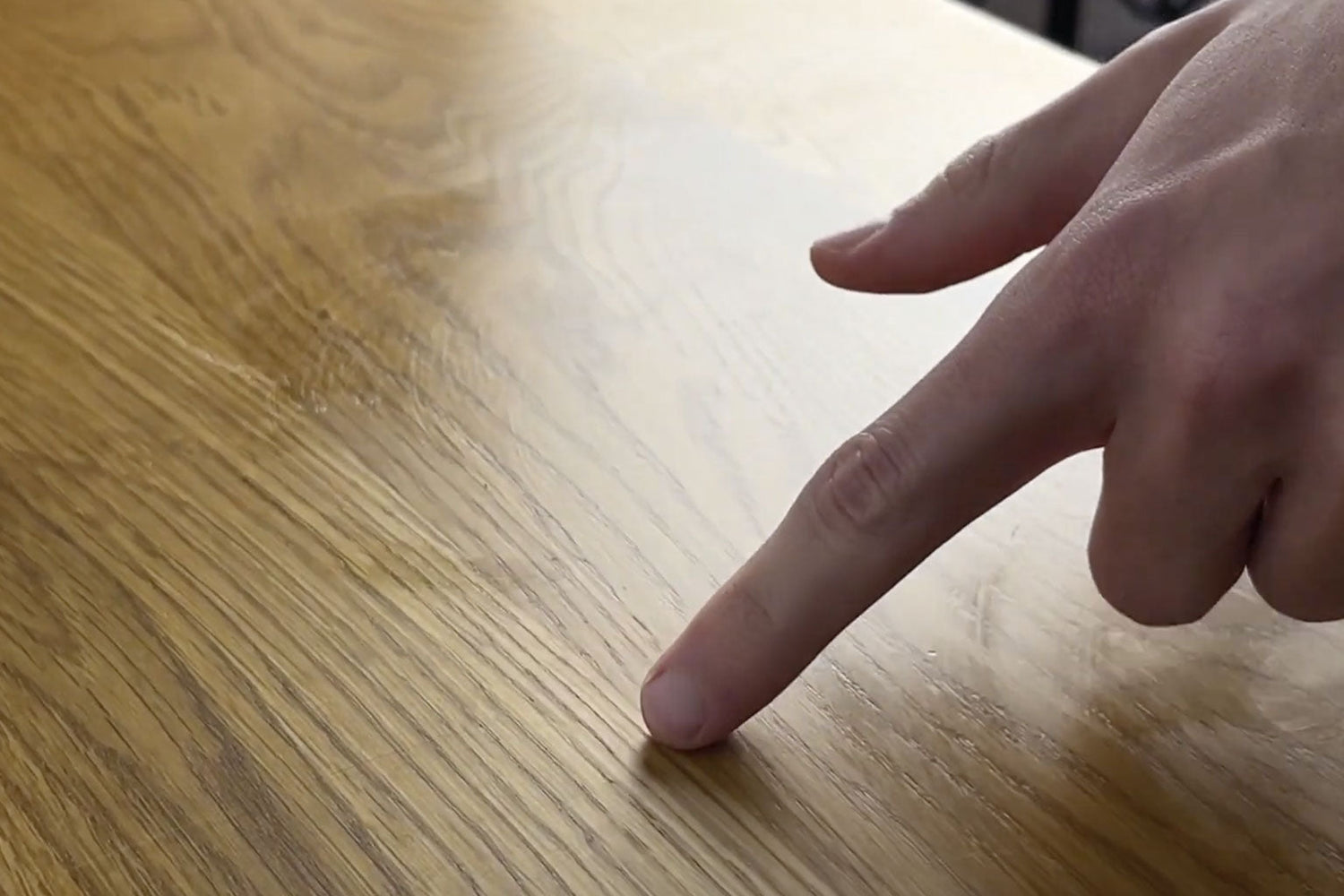
Light circles on the table are usually caused by moisture. Dark or black spots are often reactions of the wood with iron – here, usually only removing iron stains or special agents like neutralizing with oxalic acid after treatment helps. Removing black spots from wood may also be necessary when metal and moisture combine.
Another problem is removing tannin stains. Tannins are found in many types of wood, such as oak or larch, and react with metal or water. This creates dark edges that can be treated with home remedies or bleaches.
Biological causes also frequently lead to mildew stains on wood. These occur due to moisture and lack of ventilation. There are also burn marks on wood, caused by hot pots or candles.
And sometimes it's completely different things: removing red cabbage stains, removing paprika stains, or removing nicotine from wood, as they also leave visible traces.
Home Remedies for Stain Removal
If you want to remove paint from wood, you can use proven natural methods. Especially for delicate surfaces, it's important to try to remove paint from wood without sanding.
A mixture of baking soda and water often helps. For light water stains, you can try to remove water stains from a wooden table or water stains from a wooden table with a little ironing heat and a cotton cloth.
Wood stripper home remedies and wood degreaser home remedies are also natural ways to refresh old surfaces. Especially for garden furniture, you can clean Bankirai decking with home remedies or restore grayed larch wood.
If you have dark spots, you can bleach wood with hydrogen peroxide or use a wood bleach. It is essential to neutralize oxalic acid afterwards to protect the wood. This way, you can clearly see the difference when bleaching wood before and after.
Preventive Measures to Avoid Stains
To prevent water stains on wood or grease stains on a wooden table from occurring in the first place, regular maintenance helps. Use coasters, re-oil oiled surfaces regularly, and avoid standing water.
For oiled wood, regular cleaning with mild agents can clean and protect untreated wood. This also prevents having to remove stains from a wooden table.
Well-maintained wood remains beautiful and resistant for longer. This saves you from frequently having to remove stains from wooden tables or remove water stains from wood. You can find the right product here: Care Set
Tips for Caring for Oiled Wood
Oiled wood should be cleaned and re-oiled regularly. This maintains its natural shine and protects it from dirt. Small stains can thus be easily removed – whether it's removing grease stains from a wooden table, removing stains from wood, or a water stain on a wooden table.
Even stubborn cases like mildew stains on wood can be removed with a little patience and the right products.