Why we use epoxy resin for our vanity tops
Anyone looking for a durable, easy-to-maintain, and stylish vanity top will quickly come across epoxy resin. This material offers many advantages over simple fillers – both visually and functionally.
Especially for a high-quality wooden vanity top, the right processing is crucial so that it remains beautiful and resistant for years.
Advantages of epoxy resin over cheap filler
Many suppliers fill knot holes or cracks in a wooden vanity top with cheap filler. While it may look neat at first, it doesn't last long.
Fillers can detach, crack, or absorb water – and that's exactly a problem in the bathroom.
Epoxy resin, on the other hand, penetrates deep into the pores and permanently bonds with the wood. This creates a solid, closed surface that protects against moisture, dirt, and temperature fluctuations.
Another advantage: epoxy resin can be processed transparently or slightly tinted. The natural grain of the wood remains visible, preserving the unique character of each slab.
Contrary to popular belief, epoxy resin is not toxic after curing – it becomes completely harmless and hygienic in its hardened state.
This makes it ideal for areas that frequently come into contact with water or skin, such as epoxy resin sinks or epoxy resin vanity tops.
Why our vanity tops are cast with epoxy
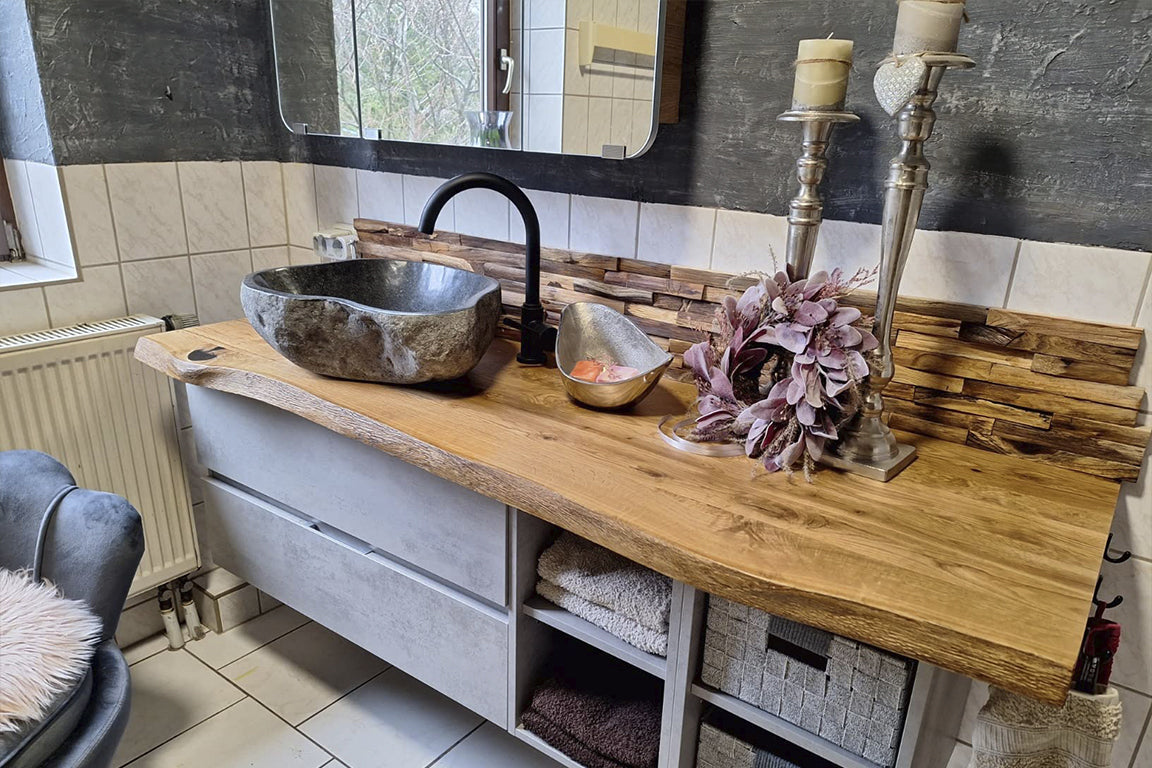
Our wooden vanity tops are carefully cast with high-quality epoxy resin. This allows us to seal natural imperfections, cracks, and knot holes without sealing the wood or obscuring its structure.
The decisive difference: We don't use standard resin, but one that is particularly heat-resistant. This means the surface can easily withstand warm water or steam.
The result is a durable vanity top material combination of solid wood and highly resistant resin – natural, robust, and easy to maintain all at once.
For comparison: With inferior processing or incorrect material, epoxy resin joints can have disadvantages – for example, with cheap products that remain too soft or discolor.
That's why we pay attention to the correct mixture, curing, and thickness of each individual slab.
The combination is also visually appealing: A slab of oak or walnut with fine resin fillings looks like an elegant epoxy resin tabletop, but specifically adapted for wet areas.
Tip: What choice should I make?
If you're torn between filler, oil, or resin, remember: choose a solution that is both natural and durable.
A wooden vanity top with epoxy resin filling combines craftsmanship with modern technology.
The material has excellent epoxy resin properties: it is strong, water-repellent, and chemical-resistant – perfect for daily use in the bathroom or kitchen.
It also proves to be durable and hygienic as an epoxy resin countertop.
The important thing is to distinguish quality from cheap goods. With inferior mixtures, epoxy resin can have disadvantages, such as yellowing or cracks at high heat. Similarly, one should know that a synthetic resin floor can have disadvantages if applied improperly – this also applies to epoxy resin floor disadvantages.
Our slabs are specially designed for furniture and vanity top applications – meaning controlled surfaces that are not extensively walkable.
This ensures your epoxy resin vanity top remains dimensionally stable, elegant, and easy to maintain – without maintenance or color loss.
Conclusion
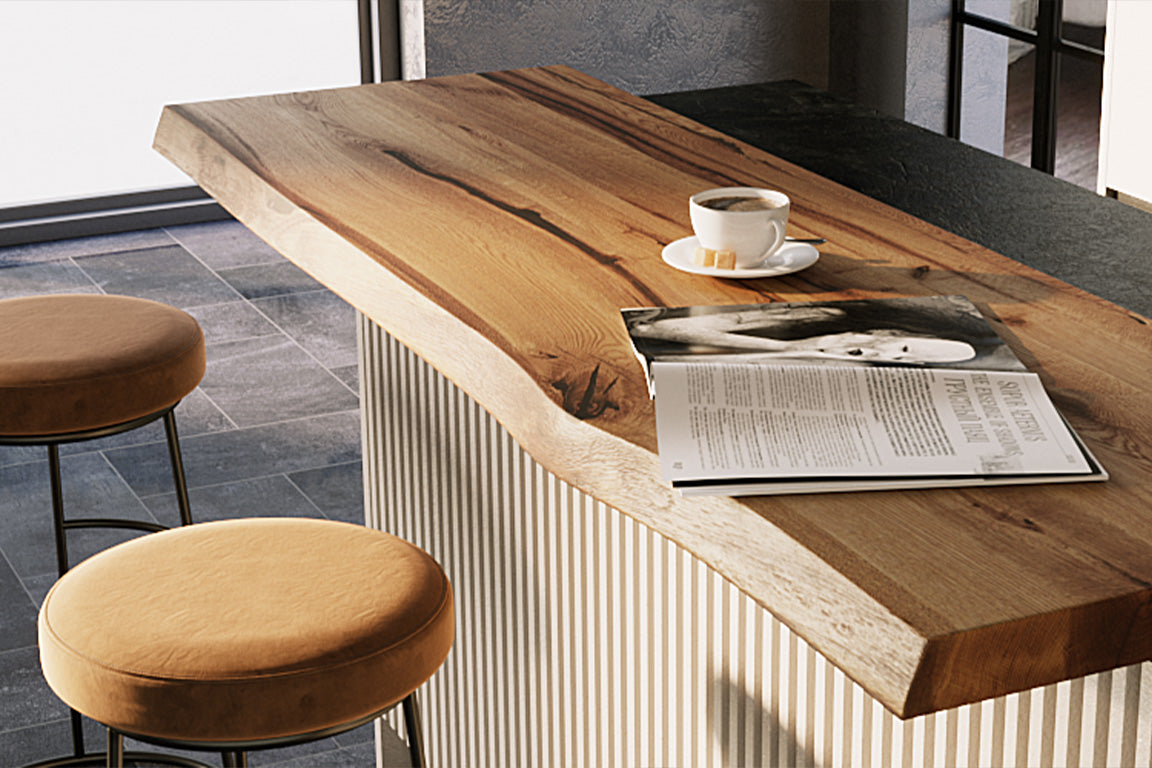
An epoxy resin table or an epoxy resin tabletop impressively demonstrates how strong and aesthetic the material is.
Applied to the bathroom area, it offers all the advantages: moisture resistance, durability, easy cleaning, and an elegant appearance.
That's why at BestLoft, we consistently rely on epoxy resin vanity solutions – because they combine beauty and function in a unique way.